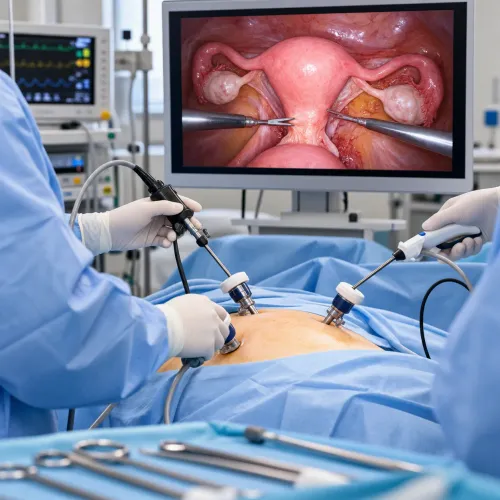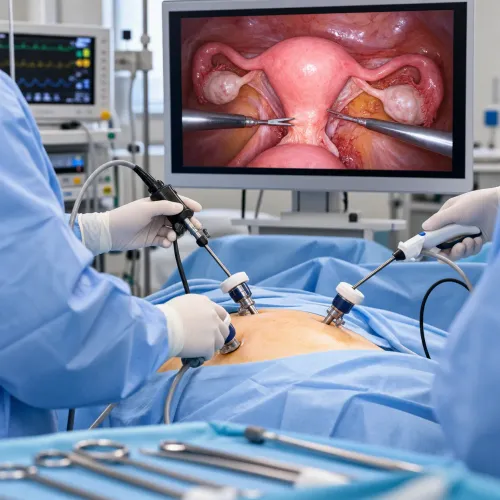
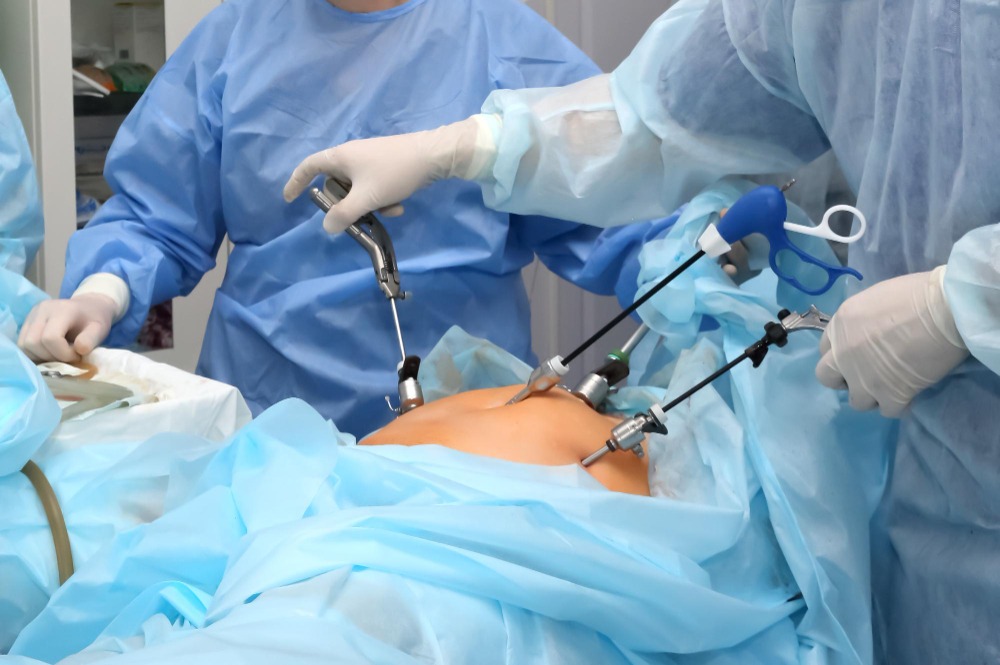
Laparoscopy is a minimally invasive surgical approach in which a camera and specialised instruments are introduced through small abdominal incisions. It can be used to diagnose or treat several gynecological conditions, but it is not automatically the best route for every operation.
The right approach depends on the suspected condition, previous surgeries, the extent of disease, uterine or ovarian size, overall health, and the surgeon’s assessment. Understanding these factors helps patients make decisions based on clinical suitability rather than incision size alone.
Conditions Commonly Assessed or Treated
Gynecological laparoscopy may be considered for:
- Ovarian cysts
- Endometriosis
- Fibroids in selected locations
- Ectopic pregnancy
- Chronic pelvic pain
- Fertility-related assessment
- Tubal surgery
- Removal of the uterus
- Certain pelvic infections or adhesions
A laparoscopy performed only to diagnose a problem is different from an operative procedure intended to remove a cyst, treat endometriosis, or complete a hysterectomy. Patients should know the planned extent of surgery before giving consent.
Potential Advantages
Compared with open abdominal surgery, a suitable laparoscopic procedure may involve smaller incisions, reduced wound discomfort, a shorter hospital stay, and an earlier return to routine activities. These are potential advantages, not guarantees.
Complex surgery can still require substantial internal healing. Feeling better externally does not mean the tissues have completely recovered. Activity restrictions should therefore follow the surgeon’s instructions rather than appearance of the incisions.
When Open Surgery May Be Safer
Open surgery may be recommended when there is a very large mass, extensive disease, significant adhesions, suspected cancer, uncontrolled bleeding, or another factor that makes minimally invasive access difficult or unsafe.
Occasionally, an operation that begins laparoscopically needs to be converted to an open procedure. This possibility should be discussed beforehand. Conversion is a safety decision, not necessarily a surgical failure.
Evaluating a Surgical Plan
Before choosing gynecological laparoscopy in Navi Mumbai, ask the surgeon:
- What diagnosis has been established?
- What exactly will be performed?
- Is surgery necessary at this stage?
- What nonsurgical alternatives are available?
- Could an ovary, tube, or uterus need to be removed?
- How might the procedure affect fertility?
- What is the possibility of conversion to open surgery?
- What recovery time should be planned?
- Will removed tissue undergo histopathology?
Patients planning future pregnancy should raise fertility priorities explicitly. The surgical plan may need to preserve reproductive structures whenever medically appropriate.
Preparation and Recovery
Preoperative preparation may involve blood tests, imaging, anaesthetic review, fasting, medication adjustments, and pregnancy testing. Tell the care team about allergies, previous anaesthesia problems, implanted devices, and all medicines or supplements.
After surgery, temporary abdominal discomfort, fatigue, bloating, or shoulder-tip pain from the gas used during laparoscopy may occur. Walking as advised can support circulation and recovery, but strenuous exercise and lifting may need to wait.
Seek urgent medical attention for increasing abdominal pain, heavy bleeding, fever, breathing difficulty, persistent vomiting, fainting, inability to pass urine, or redness and discharge around an incision.
Dr Agrawal Clinic Nerul Navi Mumbai evaluates whether laparoscopy is appropriate based on the diagnosis and the patient’s wider health needs. A responsible consultation should explain not only the advantages of minimally invasive surgery but also its limitations and alternatives.
The most important question is not whether laparoscopy is advanced. It is whether the chosen procedure and surgical route can address the condition safely while respecting the patient’s fertility goals, recovery needs, and long-term health.
Keywords