Heavy bleeding does not automatically prevent conception, but the condition causing it can affect ovulation, the uterine cavity, implantation, or your health before pregnancy. You will learn which bleeding patterns need assessment, which tests to request, and how to plan treatment without losing sight of your pregnancy goals.
Key takeaways
- The condition causing heavy bleeding matters more for fertility than blood loss itself.
- Seek prompt assessment for soaking pads hourly, bleeding between periods, or bleeding after sex.
- Check haemoglobin and iron levels before pregnancy if periods are heavy or prolonged.
- Choose treatments that control bleeding without delaying your planned conception timeline.
Can heavy periods reduce your chances of getting pregnant?
Blood loss itself does not usually cause infertility. Fertility is more often affected by the condition causing the bleeding, while severe bleeding can cause iron-deficiency anaemia, fatigue, and delayed pregnancy planning.
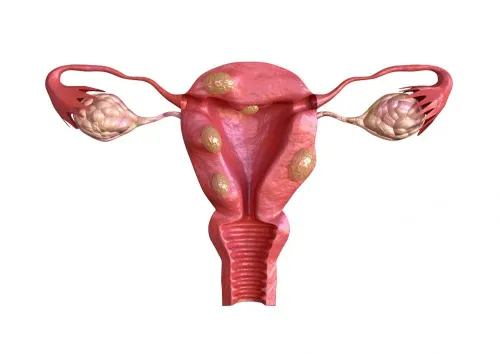
- Fibroids can distort the uterine cavity, interfere with sperm movement or implantation, and raise miscarriage risk depending on their size and location.
- Endometriosis can cause painful periods, painful sex, pelvic inflammation, and difficulty conceiving even when an ultrasound appears normal.
- Adenomyosis can produce heavy, painful periods and may affect implantation or pregnancy outcomes.
- Endometrial polyps can occupy the uterine cavity and reduce the chance of implantation.
- Thyroid disease can disrupt menstrual cycles and ovulation, making conception harder.
- Ovulation problems, including those linked to polycystic ovary syndrome, can cause irregular bleeding because the uterine lining builds up and sheds unpredictably.
- Bleeding disorders can cause unusually heavy periods and increase bleeding risks during pregnancy or delivery, although they do not automatically prevent conception.
When researching heavy menstrual bleeding fertility in Navi Mumbai, track bleeding that lasts longer than seven days, soaks a pad every hour for several hours, causes flooding, or produces clots larger than a 2.5-centimetre coin.
Irregular bleeding also deserves assessment, especially when pregnancy is possible: take a pregnancy test rather than assuming it is a normal period. A gynecological evaluation can identify the cause and guide safer pregnancy planning.
Which bleeding patterns need prompt medical assessment?
Seek prompt assessment if bleeding lasts more than 7 days, repeatedly soaks a pad or tampon every 1–2 hours, causes flooding, or includes clots larger than a 2.5-cm coin.
A predictable heavy flow differs from irregular bleeding before pregnancy, which needs attention because ovulation problems, thyroid disease, fibroids, polyps, infection, medicines, or pregnancy can cause it.
| Pattern | What it means | Action |
|---|---|---|
| Heavy but regular period | Bleeding arrives on schedule but is prolonged or difficult to manage | Arrange assessment, especially with fatigue, breathlessness, pelvic pain, or pressure |
| Irregular bleeding before pregnancy | Bleeding occurs between expected periods, after missed periods, or with unpredictable cycles | Take a pregnancy test if conception is possible and book medical review |
| Bleeding between periods | Spotting or flow occurs outside your usual period | Arrange prompt assessment; infection, polyps, fibroids, medicines, or ovulation problems may be involved |
| Bleeding after sex | Blood appears during or soon after intercourse | Arrange prompt assessment, particularly if it recurs or comes with pain or unusual discharge |
| Bleeding in early pregnancy | Any bleeding after a positive test or missed period | Contact a clinician promptly; severe pain or heavy flow is an emergency |
Go to urgent care if you soak at least one pad or tampon per hour for more than 2 hours, or develop fainting, severe dizziness, chest pain, shortness of breath, severe abdominal pain, or one-sided pain. In early pregnancy, shoulder-tip pain or collapse needs emergency care.
How can heavy bleeding affect iron levels before pregnancy?
Losing iron month after month can deplete your reserves before your haemoglobin falls. Iron-deficiency anaemia means your blood cannot carry oxygen efficiently. Watch for fatigue, breathlessness on exertion, dizziness, palpitations, headaches, pale skin, or reduced exercise tolerance; normal haemoglobin does not always exclude early iron depletion.
1. Request a complete blood count (CBC), including haemoglobin, haematocrit, mean corpuscular volume, and red-cell indices. The CBC shows whether anaemia is present and whether small red cells support iron deficiency.
2. Request serum ferritin to measure stored iron. A low ferritin supports iron deficiency, even when haemoglobin is normal.
3. Ask whether further iron studies are needed when ferritin is borderline, inflammation is present, or the results do not fit your symptoms. These may include serum iron, total iron-binding capacity or transferrin, and transferrin saturation.
4. Review the results with a clinician before trying to conceive. Treatment often involves clinician-directed oral iron and addressing the bleeding source; severe deficiency may require a different replacement plan. Repeat blood tests confirm that haemoglobin has recovered and iron stores are being rebuilt.
Correcting the CBC abnormality is not the whole goal. Enter pregnancy with replenished ferritin when possible, because pregnancy increases iron requirements and ongoing heavy bleeding can undo replacement. Do not delay urgent care for fainting, chest pain, or breathlessness at rest.
What happens during a fertility and heavy-bleeding evaluation?
Bring records from at least two cycles when it is safe to wait. For people considering heavy period bleeding and pregnancy planning in Navi Mumbai, this often gives a clearer picture than memory alone.
1. Record the first day of each period, the number and type of pads or tampons used, product changes every one to two hours, nighttime changes, flooding, clots, pain, dizziness, medicines, contraception, previous pregnancy-test results, blood counts, and scans. Note whether cycles are regular or unpredictable.
2. The clinician asks about pregnancy possibility, bleeding between periods or after sex, pelvic pressure, pain with sex, anaemia symptoms, previous pregnancies, and personal or family bleeding problems. List medicines such as aspirin, anticoagulants, and hormonal treatments. A pregnancy test is appropriate when pregnancy is possible, even if bleeding seems like a period.
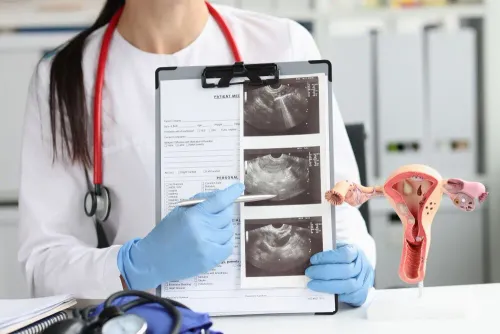
3. Examination is guided by symptoms and findings; it is not automatic for everyone. A pelvic ultrasound can assess the uterus, endometrium, ovaries, fibroids, polyps, and adenomyosis-related changes. A normal scan does not always exclude endometriosis.
4. Thyroid-stimulating hormone testing checks for thyroid-related cycle or ovulation problems. Targeted tests for von Willebrand disease or another bleeding disorder, and tests confirming ovulation, are ordered when the history indicates them.
5. Fertility assessment includes both partners: ovulation review, semen analysis, and evaluation of the uterus and fallopian tubes. Ovarian-reserve testing is added when clinically indicated; testing only the woman can miss male-factor or tubal causes.
How should you choose treatment when pregnancy is a goal?
Choose treatment around your pregnancy timeline: control bleeding while preventing conception, or use a fertility-compatible option while trying. The choice changes if pregnancy is possible this cycle.
| Option | Conception effect | Key caution |
|---|---|---|
| Hormonal contraception | Prevents conception while used | Useful when pregnancy is being postponed; stop and review before trying |
| Levonorgestrel intrauterine system | Prevents conception while in place | Reduces bleeding but must be removed before pregnancy |
| Tranexamic acid | Does not act as contraception | Take only during prescribed bleeding days; discuss clotting history and possible pregnancy |
| Nonsteroidal anti-inflammatory drugs | Do not act as contraception | Can reduce bleeding and cramps; check suitability when trying to conceive and avoid self-use during pregnancy |
A polyp or submucosal fibroid that projects into the uterine cavity can often be treated without removing the uterus. Hysteroscopic polyp removal or hysteroscopic myomectomy may preserve fertility. Endometrial ablation is different: it destroys the uterine lining, does not preserve fertility, and is unsuitable if you may want pregnancy.
Fibroid surgery needs individual assessment based on size, number, location, cavity distortion, symptoms, and pregnancy plans. Myomectomy may suit selected patients; uterine-artery embolization has less certain reproductive implications.
Book a gynecologist for heavy periods Nerul when bleeding persists, fertility is delayed, or treatment choices are unclear. Seek urgent care if you soak at least one pad or tampon hourly for more than two hours, or have fainting, severe dizziness, breathlessness, chest pain, or possible pregnancy.
Dr Agrawal Clinic Nerul Navi Mumbai can help coordinate bleeding assessment with preconception planning.
Frequently asked questions
Can heavy periods reduce your chances of getting pregnant?
Heavy bleeding itself does not usually cause infertility. Fertility is more often affected by its cause, such as fibroids, adenomyosis, endometriosis, thyroid problems, ovulation disorders, or uterine polyps.
Which bleeding patterns need prompt medical assessment?
Arrange medical assessment for bleeding that soaks a pad or tampon every hour, lasts more than seven days, occurs between periods, follows sex, or happens with severe pain, dizziness, or breathlessness.
How can heavy bleeding affect iron levels before pregnancy?
Repeated blood loss can reduce iron stores and cause iron-deficiency anaemia, leading to tiredness, weakness, breathlessness, headaches, or paleness. A blood count and ferritin test can check for this.
What happens during a fertility and heavy-bleeding evaluation?
A gynecologist reviews your cycle pattern, bleeding amount, pain, medical history, and pregnancy plans. Assessment can include a pelvic examination, complete blood count, ferritin, thyroid testing, pregnancy testing, and pelvic ultrasound.
How should you choose treatment when pregnancy is a goal?
Discuss the timing of conception before treatment. The choice depends on the bleeding cause, anaemia, pain, fertility needs, and whether you want to try for pregnancy now or later.
Keywords