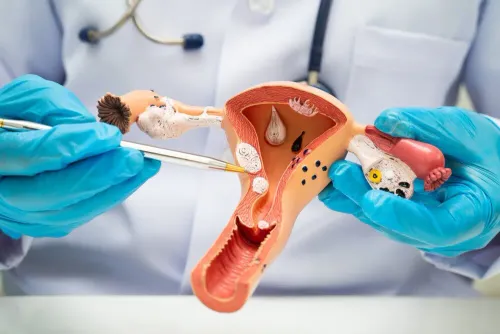
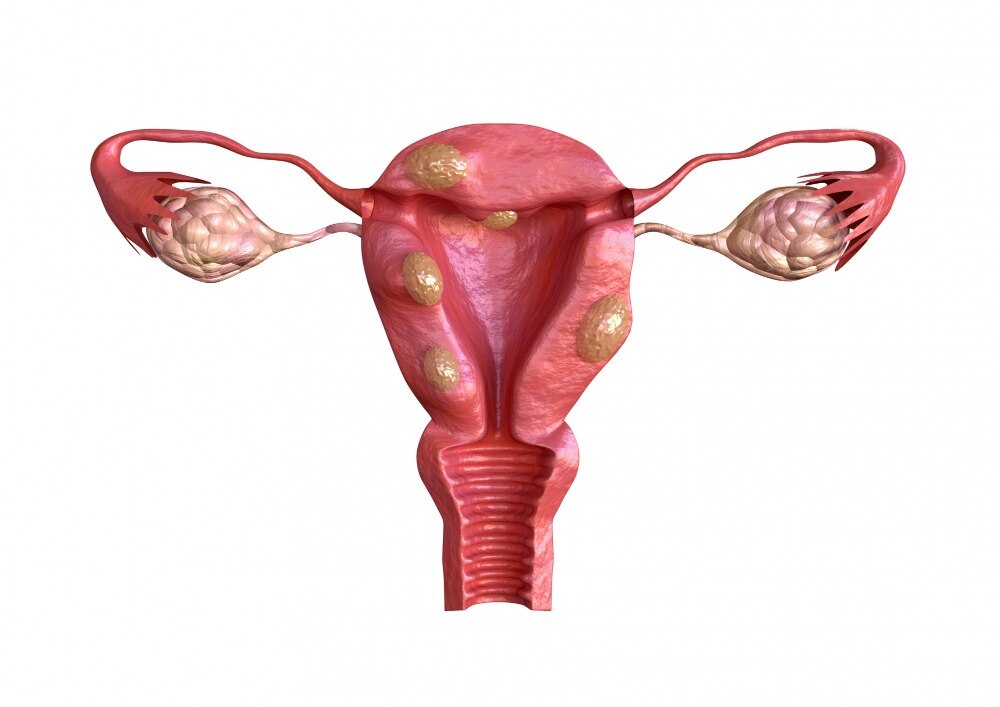
Heavy bleeding, pelvic pain, pressure, painful sex and difficulty conceiving can point to fibroids, endometriosis, both conditions, or another cause. You will be able to compare the symptom patterns, understand which tests clarify the diagnosis, and match treatment with your fertility plans and the location of the disease.
Key takeaways
- Heavy bleeding and pressure point more toward fibroids.
- Period-linked pelvic pain and painful sex point more toward endometriosis.
- Ultrasound detects fibroids; endometriosis may need MRI or laparoscopy.
- Choose treatment around symptoms, pregnancy plans and anemia risk.
Fibroid endometriosis symptoms: which pattern do yours follow?
Fibroid endometriosis symptoms do not follow one reliable pattern. Fibroids more often cause heavy or prolonged periods, anemia, pelvic pressure, frequent urination, constipation, or an enlarged lower abdomen. Endometriosis more often causes pain that intensifies before or during periods, pain during or after sex, painful bowel movements or urination during menstruation, and difficulty conceiving.
| Pattern | More suggestive of fibroids | More suggestive of endometriosis |
|---|---|---|
| Bleeding | Heavy or prolonged periods; anemia | Bleeding can occur, but pain is often the stronger clue |
| Pain | Pressure, fullness, or period cramps | Cyclical pelvic pain, painful sex, bowel movements, or urination |
| Size and pressure | Enlarged abdomen, urinary frequency, constipation | Deep pelvic or bowel symptoms without an enlarged uterus |
| Fertility | Cavity-distorting fibroids can interfere with conception | Endometriosis can affect fertility even with little visible disease |
These clues do not identify the condition. Both disorders can cause pelvic pain, heavy bleeding, bowel symptoms, infertility, or no symptoms at all, and they can occur together. A small fibroid may cause no trouble, while a small endometriosis lesion can cause severe pain.
You need a clinical evaluation rather than a symptom label. A pelvic examination, pregnancy test when relevant, and complete blood count can identify important complications such as anemia, but imaging or specialist assessment is needed to distinguish the conditions.
Seek urgent care for sudden severe pain, fainting, fever, very heavy bleeding, or pregnancy with pain or bleeding.
Which tests distinguish fibroids from endometriosis?
Evaluation starts with a pelvic examination, a pregnancy test when relevant, and a complete blood count to check for anaemia. Your clinician also records bleeding, pain timing, bowel or bladder symptoms, fertility plans and previous surgery.
| Test | What it shows | When it helps |
|---|---|---|
| Transvaginal ultrasound | Fibroid size, number, location and effect on the uterine cavity | First-line assessment; specialist scanning can also identify deep endometriosis |
| MRI pelvis | Detailed mapping of fibroids and deep endometriosis near the bowel, bladder or ureters | When ultrasound is unclear, disease is extensive, or surgery needs planning |
| Hysteroscopy | Direct view inside the uterine cavity | When bleeding suggests a cavity-distorting fibroid or polyp; it does not diagnose endometriosis outside the cavity |
| Laparoscopy | Direct inspection of the pelvis, with the option to treat visible endometriosis | When imaging is negative or inconclusive, symptoms persist, or operative treatment is being considered |
A routine ultrasound can clearly show many fibroids, but a normal scan does not rule out endometriosis, especially superficial disease. Specialist ultrasound or MRI can strengthen the diagnosis without automatically requiring surgery.
Ask an endometriosis doctor in Navi Mumbai whether the imaging was performed and interpreted with endometriosis in mind. If bowel, bladder, infertility or severe anaemia is involved, seek coordinated care rather than choosing a clinician by the label “specialist” alone.
When do fibroids need medicine, a procedure or surgery?
Medicine fits when fibroids cause manageable bleeding or pain without major cavity distortion, severe anemia, or pressure symptoms. A small, symptom-free fibroid often needs observation with follow-up imaging rather than treatment.
1. Use medicine for symptom control. Tranexamic acid can reduce heavy menstrual bleeding during periods; hormonal contraception can reduce bleeding when pregnancy is not an immediate goal. Treat iron-deficiency anemia with confirmed iron replacement, but do not let supplements replace investigation of ongoing blood loss.
2. Choose a procedure when the fibroid’s position drives the problem. A submucosal fibroid projecting into the uterine cavity is strongly linked with heavy bleeding and may affect fertility even when small; hysteroscopic removal can treat it without abdominal surgery. Multiple or larger fibroids need assessment of total size, number and uterine distortion.
3. Consider surgery when bleeding causes significant anemia, the uterus is enlarged, pressure affects the bladder or bowel, symptoms persist despite medicine, or fertility is affected. Myomectomy removes fibroids while preserving the uterus, but new fibroids can develop. Uterine artery embolisation can reduce bleeding and bulk symptoms, yet its fertility implications require discussion.
Hysterectomy is definitive and ends the ability to carry a pregnancy.
Your pregnancy timeline changes the choice: cavity-distorting fibroids deserve earlier review, while outer-surface fibroids often matter less for conception. A fibroid specialist Nerul should review the ultrasound findings, complete blood count, symptom severity and pregnancy plans together rather than treating the scan alone.
How is endometriosis treatment matched to pain and fertility goals?
Choose treatment by your immediate goal: control pain, protect fertility, or remove visible disease. Ibuprofen or other analgesics can reduce pain, while combined hormonal contraception, progestogens and selected GnRH-directed medicines suppress cycling and endometriosis activity. They do not permanently remove lesions, and pain can return after stopping treatment.
| Option | Main benefit | Key trade-off |
|---|---|---|
| Analgesics | Reduce pain during flares | Do not treat lesions; NSAIDs can irritate the stomach or affect kidneys |
| Hormonal therapy | Suppress periods and pain | Prevents pregnancy while used; symptoms can return after stopping |
| Excision or ablation surgery | Removes or destroys accessible lesions; treats endometriomas or deep disease | Ovarian reserve, adhesions and organ injury are concerns; disease can recur |
If you are trying to conceive, separate pain treatment from fertility treatment. Hormonal suppression delays pregnancy, so an endometriosis doctor in Navi Mumbai should discuss timing, ovarian reserve, endometriomas and whether assisted conception belongs in the plan.
Surgery deserves careful selection rather than a “laser versus medicine” decision. Persistent pain, an endometrioma or deep disease can justify it, but suspected bowel, bladder or ureter involvement requires a team with the right surgical expertise.
- your pain severity and response to medication
- your pregnancy timeline
- the lesion’s location and effect on an ovary or nearby organ
- the chance of symptom recurrence and follow-up needed
How should you choose treatment and specialist care in Navi Mumbai?
Choose care based on the problem affecting your life now, your fertility timeline, and the clinician’s ability to manage both conditions—not on the label alone. A small fibroid outside the uterine cavity may need observation, while a small endometriosis lesion can cause disabling pain.
| Question | Fibroid-focused clue | Endometriosis or coexisting-condition clue |
|---|---|---|
| What needs treatment? | Bleeding, anemia, pressure, or a cavity-distorting fibroid | Pain, bowel or bladder symptoms, infertility, or deep disease |
| What imaging is needed? | Transvaginal ultrasound often maps number and location | Specialist ultrasound or MRI may map deep disease; a normal scan does not exclude superficial disease |
| What is the fertility plan? | Ask whether the cavity is distorted and whether treatment could affect the uterus | Separate pain suppression from conception planning; hormonal treatment prevents pregnancy while used |
| Who should coordinate care? | A gynecologist or fibroid surgeon | A clinician who can involve fertility, colorectal, urology, or pain specialists |
Use the search term “fibroid specialist Nerul” only as a starting point. Ask whether the doctor routinely evaluates endometriosis too, reviews pelvic scans personally, and explains why observation, medication, hysteroscopy, laparoscopy, or referral fits your case.
At Dr Agrawal Clinic Nerul Navi Mumbai, ask how fertility goals, anemia, bowel or bladder findings, and coexisting disease would change the plan before agreeing to treatment.
Seek urgent assessment for sudden severe pain, fainting, fever, very heavy bleeding, or pregnancy with pain or bleeding.
Related service
Endometriosis is a full body condition in which cells similar to those in the endometrium, the layer of tissue that normally covers the inside of the... View service → |
Frequently asked questions
How do fibroid endometriosis symptoms differ?
Fibroids more often cause heavy or prolonged bleeding, anemia, pelvic pressure, frequent urination, constipation and an enlarged lower abdomen. Endometriosis more often causes period-linked pelvic pain, pain during or after sex, painful bowel movements or urination during menstruation, and difficulty conceiving.
Which tests distinguish fibroids from endometriosis?
A pelvic examination and transvaginal ultrasound commonly identify fibroids. MRI can map fibroid location and assess suspected deep endometriosis. Laparoscopy can confirm and treat endometriosis when symptoms persist or the diagnosis remains uncertain.
When do fibroids need medicine, a procedure or surgery?
Treatment depends on bleeding, pain, fibroid size and location, anemia, growth and pregnancy plans. Medicines can control bleeding or pain. Procedures such as uterine artery embolisation or hysteroscopic removal suit selected cases, while myomectomy or hysterectomy is considered when symptoms are severe or other options fail.
How is endometriosis treatment matched to pain and fertility goals?
Pain-focused care may include anti-inflammatory medicine, hormonal suppression and surgery to remove endometriosis when symptoms persist. Hormonal suppression does not support an immediate pregnancy, so fertility goals must guide the plan and referral to fertility care.
How should you choose fibroid or endometriosis treatment in Navi Mumbai?
Choose a gynecologist who reviews your symptom pattern, imaging, anemia status and pregnancy plans before recommending treatment. Patients seeking a fibroid specialist in Nerul or an endometriosis doctor in Navi Mumbai should ask whether the clinic offers follow-up and referral for imaging, surgery or fertility care.
Keywords