Being over 40 does not automatically rule out hysteroscopy or laparoscopy, but it changes the questions asked before surgery. You will be able to match symptoms and test results to the appropriate procedure, recognise bleeding that needs prompt assessment, and prepare for a safer surgical decision.
Key takeaways
- Age 40 does not rule out either procedure; symptoms and test results guide the decision.
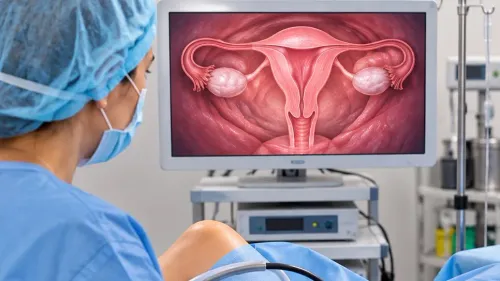
- Hysteroscopy examines the uterine cavity and may provide tissue for diagnosis.
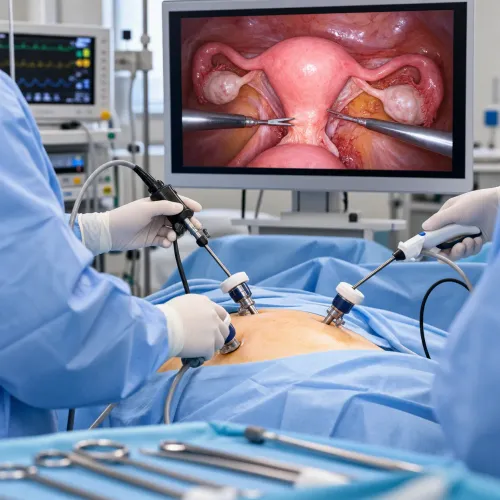
- Laparoscopy investigates the pelvis through small abdominal incisions under anaesthesia.
- Seek prompt assessment for postmenopausal bleeding, heavy bleeding, or a complex pelvic mass.
Why age 40 changes the surgical assessment, but does not decide it
Age 40 alone does not make hysteroscopy or laparoscopy unsuitable. It changes the questions: are you perimenopausal or postmenopausal, are you seeking pregnancy, and could bleeding or a mass signal disease requiring tissue diagnosis? The indication and findings—not your birthday—set eligibility.
Your assessment should cover:
- The symptom and target: the uterine cavity, or the ovaries, tubes and pelvic lining.
- Examination and ultrasound findings, including a polyp, fibroid, cyst or suspicious adnexal mass.
- Pregnancy status and fertility goals.
- Blood pressure, diabetes, obesity, anaemia, heart or lung disease, and sleep apnoea.
- Previous abdominal operations, which can increase adhesions and operative difficulty.
- Medicines, especially anticoagulants, and the planned anaesthetic.
- Whether non-surgical tests answer the question first.
| Procedure | Examines | What determines suitability |
|---|---|---|
| Hysteroscopy | The inside of the uterus | Directly evaluates a suspected polyp, submucosal fibroid, retained tissue or abnormal cavity; it does not assess ovaries or tubes. |
| Laparoscopy | The pelvis, ovaries, tubes and outside of the uterus | Requires a reason such as endometriosis, adhesions, selected cysts, ectopic pregnancy or a suspicious mass. |
Hysteroscopy and laparoscopy after forty in Navi Mumbai therefore require individual planning, not an age cutoff. Ask whether surgery is diagnostic or therapeutic, whether tissue will go for histopathology, what happens if severe adhesions or cancer appear, and where urgent postoperative care is available.
When hysteroscopy is useful after 40—and when another test comes first
Hysteroscopy for women over forty is appropriate when bleeding or imaging suggests a problem inside the uterine cavity, such as an endometrial polyp, submucosal fibroid, retained tissue or an abnormal biopsy. It is not automatically the first test for every episode of heavy or irregular bleeding.
At age 45 or older, endometrial sampling is generally part of the assessment; under 45, sampling is needed when bleeding persists, treatment fails, or risks include obesity, polycystic ovary syndrome or prolonged unopposed oestrogen exposure.
| Test | What it examines | When it comes first |
|---|---|---|
| Transvaginal ultrasound | Uterus, endometrium, ovaries and pelvic masses | Suspected fibroid, ovarian problem or other pelvic mass |
| Endometrial biopsy | A tissue sample from the uterine lining | Cancer or hyperplasia risk, persistent bleeding or failed treatment |
| Hysteroscopy | The uterine cavity through the cervix | Suspected polyp, submucosal fibroid or a biopsy needing direct inspection |
| Laparoscopy | The outside of the uterus, tubes, ovaries and pelvis | Suspected endometriosis, adhesions, tubal disease or an adnexal mass |
Postmenopausal bleeding needs prompt assessment, not an assumption that a polyp is harmless. A transvaginal ultrasound measurement of 4 mm or less lowers cancer risk substantially, but recurrent bleeding still requires sampling or hysteroscopy. Postpone hysteroscopy during possible pregnancy or active pelvic infection.
Discuss perforation, cervical injury, infection, bleeding and fluid overload; operative hysteroscopy carries greater risk than a diagnostic examination.
When laparoscopy is justified after 40 and what keyhole surgery involves
After 40, laparoscopy is justified when imaging or symptoms point to endometriosis, an ovarian cyst, ectopic pregnancy, adhesions, tubal disease or persistent pelvic pain that non-surgical assessment cannot explain.
It is not a routine fertility test: if you seek pregnancy, assess ovarian reserve, ovulation, semen and tubal function based on your history and results, without waiting a year after age 40.
| Option | What it involves | When it applies |
|---|---|---|
| Non-surgical evaluation | Ultrasound, MRI, blood tests or tubal imaging without abdominal entry | First assessment for many cysts, pain and fertility questions |
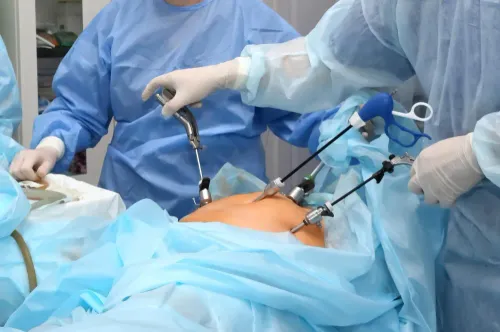
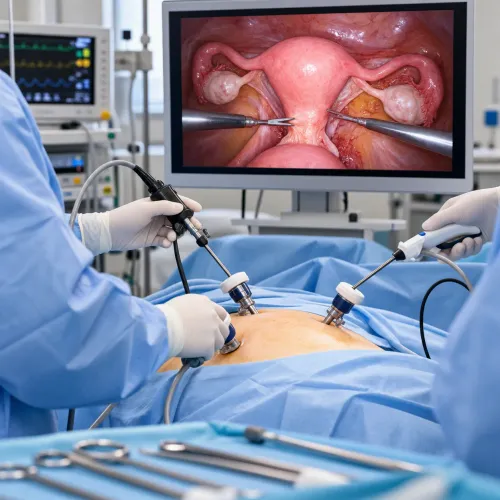
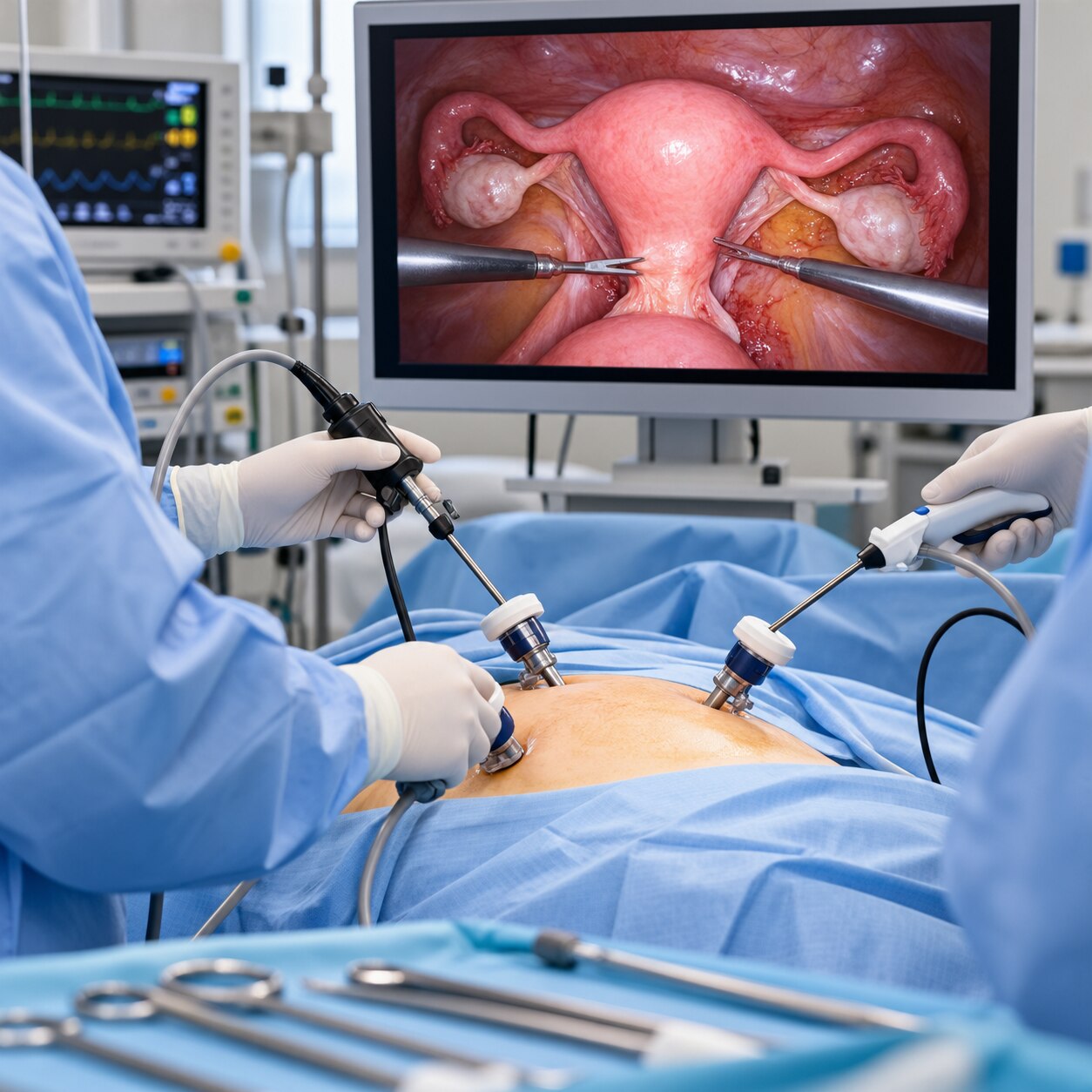
| Laparoscopy | General anaesthesia, a camera through a small abdominal incision, and instruments through other small cuts | Diagnosis and treatment of endometriosis, adhesions, selected cysts and tubal problems |
| Open surgery | A larger abdominal incision with direct access to the pelvis | A very large or suspicious mass, severe adhesions, major bleeding or cancer concerns |
The surgeon may remove endometriosis, separate adhesions, treat a cyst or remove a damaged tube or ovary through the same incisions. Ask whether tissue will go for histopathology and what happens if severe adhesions or cancer are found; conversion to laparotomy must be part of consent.
Key risks include bleeding, infection, blood clots, anaesthetic complications, and injury to the bowel, bladder, ureter or major blood vessels. Previous abdominal surgery, severe adhesions and major obesity can make keyhole surgery harder. A search for “laparoscopy gynecologist Nerul” cannot replace checking operative experience, alternatives and access to urgent postoperative care.
Which bleeding and pelvic findings need prompt investigation
Bleeding after 40 needs prompt assessment when it is new, prolonged, unusually heavy, occurs between periods or after sex, or returns after months without menstruation. Do not watch and wait if examination or ultrasound suggests an endometrial polyp, submucosal fibroid, thickened or irregular endometrium, or another cavity abnormality.
| Finding | What to do | Why it matters |
|---|---|---|
| Persistent heavy or irregular bleeding | Arrange ultrasound and, when endometrial disease is suspected, endometrial sampling or hysteroscopy | A polyp, submucosal fibroid or cancer can be missed by symptom-based treatment alone |
| Bleeding after menopause | Obtain transvaginal ultrasound; investigate persistent or recurrent bleeding even when the lining measures 4 mm or less | A thin lining lowers cancer risk but does not explain repeated bleeding |
| Complex or solid adnexal mass, papillary projections, ascites or marked blood flow | Seek prompt specialist assessment; do not assume it is a benign cyst | Laparoscopy, removal of the tube or ovary, or open surgery may be needed after imaging and risk assessment |
| Simple cyst without worrying features | Repeat imaging on the advised schedule | Immediate surgery can expose you to avoidable risk |
A suspicious adnexal mass requires a plan for histopathology and possible cancer-directed referral, not an unplanned cystectomy. Before gynecological surgery after forty in Navi Mumbai, ask whether the procedure is diagnostic or therapeutic, what happens if severe adhesions or cancer appear, and where urgent postoperative care is available.
How to check surgical fitness and choose a local consultation
Before booking, ask whether the proposed procedure is diagnostic, therapeutic, or both, and what non-surgical alternative fits your findings. Suitability depends on blood pressure, diabetes, anaemia, heart or lung disease, obesity, sleep apnoea, previous operations, pregnancy status and anaesthetic risk—not age alone.
Take these questions to the consultation:
- Which medicines must you stop or adjust, especially warfarin, apixaban, aspirin or diabetes tablets?
- What anaesthesia is planned, and does an anaesthetist need to review you before surgery?
- Will removed tissue go to histopathology, and when will you receive the report?
- What happens if the surgeon finds cancer, severe adhesions, uncontrolled bleeding or a suspicious mass?
- Could laparoscopy require removal of an ovary or tube, or conversion to laparotomy through a larger incision?
- Which hospital provides urgent review for fever, heavy bleeding, worsening pain, breathlessness or vomiting after discharge?
| Review | Why it matters | What to confirm |
|---|---|---|
| Medical conditions | Poor control increases surgical and anaesthetic risk | Blood pressure, glucose, haemoglobin and relevant heart or lung tests |
| Medicines | Anticoagulants can increase bleeding | A written stop-and-restart plan |
| Pathology | A visual impression cannot replace tissue diagnosis | Specimen lab and report timeline |
| Emergency planning | Recovery problems need rapid assessment | Hospital, contact number and after-hours pathway |
For hysteroscopy and laparoscopy after forty in Navi Mumbai, choose a consultation that reviews your scans and pathology rather than offering an automatic operation. A laparoscopy gynecologist Nerul consultation at Dr Agrawal Clinic Nerul Navi Mumbai can help organise these questions, assess fitness and identify the hospital pathway before you consent.
Related service
Hysteroscopy is the inspection of the uterine cavity by endoscopy with access through the cervix. View service → |
Frequently asked questions
Does being over 40 make hysteroscopy or laparoscopy unsafe?
No. Age changes the surgical assessment, but eligibility depends on your symptoms, menopausal status, fertility plans, medical conditions, test results, and anaesthetic fitness.
When is hysteroscopy useful for women over 40?
Hysteroscopy is useful for examining the uterine cavity when ultrasound suggests a polyp, submucosal fibroid, retained tissue, or another abnormality. It can also allow targeted biopsy or treatment.
When is laparoscopy justified after age 40?
Laparoscopy may be considered for conditions such as endometriosis, ovarian cysts, pelvic pain, infertility-related findings, ectopic pregnancy, or a pelvic mass when examination and imaging support surgery.
Which bleeding or pelvic findings need prompt investigation?
Arrange prompt evaluation for bleeding after menopause, very heavy or persistent bleeding, bleeding between periods, bleeding after sex, a growing pelvic mass, severe pain, fainting, or unexplained weight loss.
Keywords