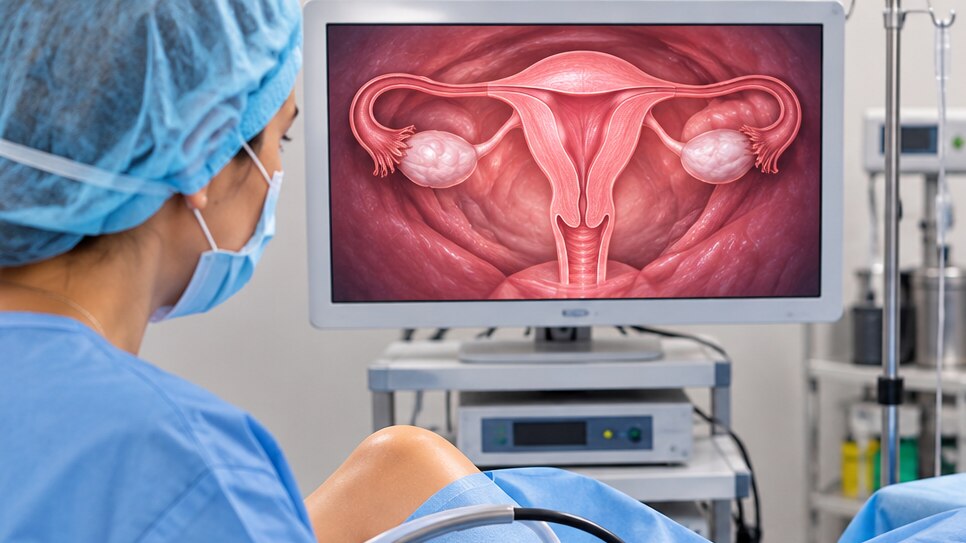
Persistent symptoms do not automatically mean that an operation is needed, and “vaginal surgery” describes an access route rather than a diagnosis. By the end, you will be able to identify problems that merit surgical assessment, compare vaginal, laparoscopic, and abdominal approaches, and prepare for a safer vaginal operation consultation.
Key takeaways
- Confirm the diagnosis before deciding whether surgery is appropriate.
- Ask why the vaginal route suits your anatomy and specific problem.
- Compare recovery, risks and success rates with laparoscopic and abdominal options.
- Bring symptom records, scan reports and a complete medication list to consultation.
What vaginal surgery involves—and which problems it can address
Vaginal surgery uses the vaginal canal as the entry route, without an abdominal incision. It is a route of access, not a diagnosis.
| Route | Where the surgeon works | What it means |
|---|---|---|
| Vaginal | Through the vaginal canal | Avoids an abdominal incision |
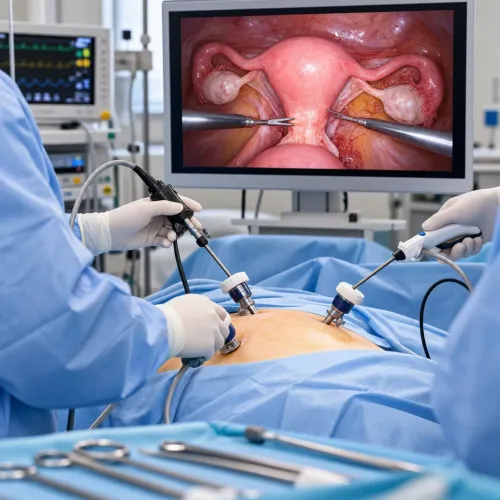
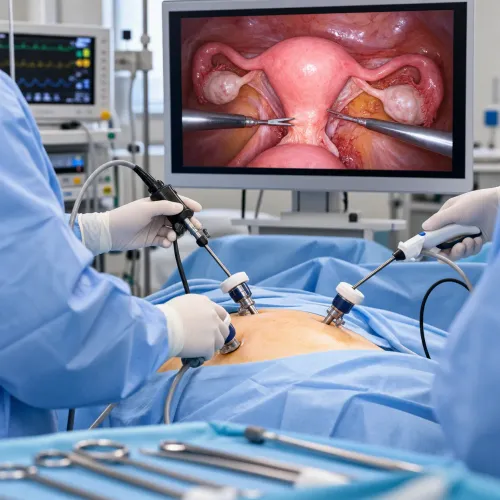
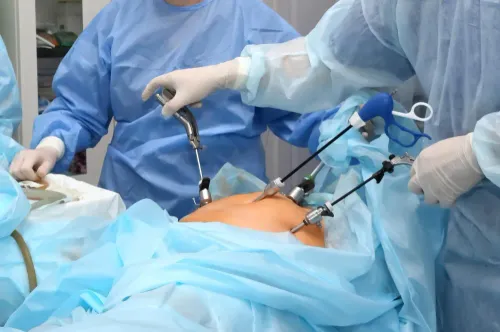
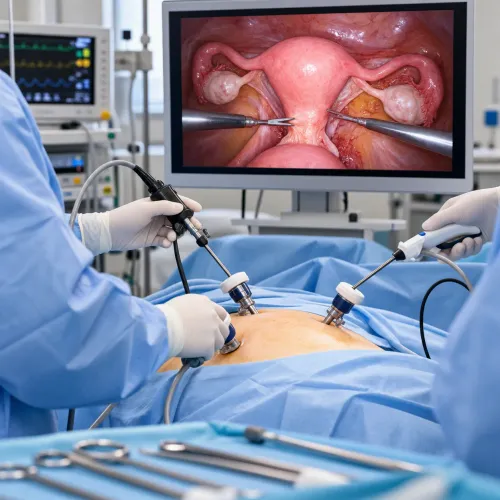
| Laparoscopic | Through small abdominal ports | Allows access to the abdomen and pelvis |
| Open abdominal | Through a larger abdominal incision | Provides wider exposure but more abdominal-wall trauma |
| Hysteroscopic | Through the cervix into the uterine cavity | Treats selected problems inside the uterus |
Assessment for a vaginal operation is reasonable when examination confirms a treatable condition, such as:
- Uterine prolapse or vaginal-wall prolapse
- Cystocele or rectocele
- Selected vaginal or cervical lesions
- Retained tissue
- Some procedures for stress urinary incontinence
Vaginal surgery for persistent gynecological problems in Navi Mumbai is worth considering only when the proposed operation matches a confirmed condition. Discharge, itching, burning, pelvic infection, PCOS, irregular cycles, and unexplained pelvic pain do not prove that surgery is needed.
Persistent pain or discharge may instead involve infection, endometriosis, fibroids, adhesions, bladder disease, bowel disease, or cancer. Testing and condition-specific treatment come first. Urinary urgency or recurrent urinary infection also require evaluation rather than an automatic operation.
Seek urgent assessment for fever, blood in the urine, abnormal bleeding, a rapidly enlarging mass, difficulty emptying the bladder, or severe new pelvic pain. A vaginal operation can still cause bleeding, infection, organ injury, urinary retention, blood clots, anaesthetic complications, or recurrent prolapse.
When symptoms make surgery worth discussing
Surgery becomes worth discussing when a persistent symptom disrupts your life, not simply because a scan or examination shows an abnormality. Record how long it has lasted, its severity, and its effect on walking, urination, bowel movements, sex, sleep, work, and confidence.
For prolapse, assess the type and stage, pressure or bulging, urinary and bowel symptoms, sexual-function concerns, medical fitness, and personal priorities. A visible prolapse with minimal symptoms does not automatically justify an operation.
- For symptomatic stage 1 or stage 2 prolapse, try at least 16 weeks of supervised pelvic-floor muscle training.
- Consider a vaginal pessary alone or with exercises, bladder training, weight management when relevant, or observation.
- Use antibiotics or antifungals only when testing confirms infection; hormonal treatment suits selected conditions.
| Option | What it offers | When it fits |
|---|---|---|
| Conservative care | Exercises, pessary, training, observation, or weight management | Symptoms are manageable or early-stage prolapse is present |
| Vaginal operation | Repairs or removes the confirmed source of troublesome symptoms | Symptoms persist, treatment fails, or non-surgical care is declined or unsuitable |
| Further diagnosis | Tests and condition-specific treatment | Pain, discharge, or bleeding has no confirmed surgical cause |
Surgery becomes more reasonable when symptoms remain troublesome after appropriate treatment. During a vaginal operation consultation, discuss fertility plans and whether treatment could affect the uterus, ovarian function, sexual activity, urination, or bowel function. Your priorities belong in the decision before scheduling surgery, not after it.
How the vaginal route compares with laparoscopic and abdominal surgery
No route is universally best. The vaginal route avoids a visible abdominal scar and, for appropriate patients, causes less abdominal-wall trauma, less postoperative pain, and a shorter hospital recovery than open abdominal surgery.
| Option | Access and advantage | Main trade-off |
|---|---|---|
| Vaginal surgery | Through the vaginal canal; no abdominal incision | Limited access to organs outside the uterus and vagina |
| Laparoscopy | Small abdominal incisions; good view of the abdomen and pelvis | Requires abdominal entry and specialised equipment |
| Open abdominal surgery | Larger incision; widest surgical exposure | More abdominal-wall trauma and usually longer recovery |
A vaginal approach becomes less suitable when the uterus is very large, anatomy is unclear, severe adhesions or extensive endometriosis block access, or the surgeon needs to inspect the ovaries, bowel, or other abdominal organs. Suspected cancer and previous operations can also change the safest route.
The choice among gynecological surgery options in Navi Mumbai should follow examination, imaging, medical fitness, disease distribution, uterine size, and surgical assessment—not the route label you prefer.
Use this decision sequence:
- Confirm the exact operation, because “vaginal surgery” might mean prolapse repair, vaginal hysterectomy, or another procedure.
- Ask for procedure-specific recovery limits. After hysterectomy, normal activities can take several weeks to resume; heavy lifting and vaginal intercourse are commonly restricted while tissues heal.
- Discuss risks, including bleeding, infection, bladder, ureter, bowel or blood-vessel injury, urinary retention, clots, anaesthetic complications, painful intercourse, recurrence, and conversion to laparoscopic or open surgery.
Questions that prevent an operation from treating the wrong problem
An operation should have one defined target. Prolapse repair can reduce the treated bulge and pressure, but it cannot guarantee that prolapse will never recur or resolve every urinary, bowel, sexual, or pelvic-pain complaint.
For stress urinary incontinence, ask for a separate assessment rather than assuming a general vaginal repair will stop leakage.
| Option | Main role | Important trade-off |
|---|---|---|
| Supervised pelvic-floor training | Non-surgical treatment for stress leakage | Requires regular, supervised exercises |
| Retropubic mid-urethral mesh sling | Supports the urethra | Mesh-specific complications, including exposure, pain, infection, urinary problems, and recurrence |
| Autologous fascial sling | Uses your own tissue to support the urethra | More extensive surgery and possible difficulty emptying the bladder |
| Colposuspension | Lifts and supports the bladder neck | Abdominal surgery with risks such as voiding problems and recurrent leakage |
Ask whether the prolapse repair uses native tissue or transvaginal mesh. They are not interchangeable: mesh can cause exposure or erosion, pain, infection, bleeding, organ perforation, urinary problems, and recurrence.
If hysterectomy is proposed, removing the uterus does not automatically require removing the ovaries. Discuss the tubes and ovaries separately, including your age, family history, cancer risk, symptoms, and the possibility of surgical menopause.
Get these answers in writing:
- Which exact symptom should improve, and which could remain?
- What non-surgical and surgical alternatives exist?
- What are the expected benefit, recurrence risk, recovery restrictions, and follow-up plan?
How to prepare for a vaginal-operation consultation in Nerul
A location-based search is not proof of surgical expertise. If you are comparing a vaginal surgery specialist Nerul or gynecological surgery options in Navi Mumbai, verify the doctor’s postgraduate qualifications, registration in the National Medical Commission’s Indian Medical Register, and registration with the Maharashtra state medical council.
Prepare your vaginal-operation consultation in this order:
1. Take a symptom timeline, previous reports and scans, medication list, allergy details, operation history, pregnancy history, fertility plans, and questions about your priorities.
2. Ask for the confirmed diagnosis, examination findings, imaging results, and the specific symptom the operation is expected to improve. Ask which pain, urinary, bowel, sexual, or pelvic symptoms could remain.
3. Ask why surgery is proposed now, what non-surgical treatment remains, and whether another surgical route is safer or more effective.
4. Ask about the doctor’s experience with the exact procedure, expected hospital stay, procedure-specific recovery limits, complication rates, and the chance of conversion to laparoscopic or abdominal surgery.
5. Ask whether fertility, ovarian function, urination, bowel function, or sexual activity could change. If hysterectomy is proposed, discuss the tubes and ovaries separately; removing the uterus does not automatically require removing the ovaries.
6. Request follow-up arrangements and a written total expected cost covering hospital, anaesthesia, tests, medicines, and follow-up.
Dr Agrawal Clinic Nerul Navi Mumbai can provide a starting consultation for persistent symptoms and surgical assessment. Proceed only after a confirmed diagnosis and an informed comparison of benefits, risks, routes, and alternatives.
Frequently asked questions
What problems can vaginal surgery address?
Vaginal surgery is an access route used for selected gynecological problems, including conditions involving the uterus, vagina or pelvic floor. Your diagnosis, anatomy and treatment goal determine whether it is suitable.
When is vaginal surgery worth discussing?
Discuss it when persistent symptoms affect daily life, conservative treatment has not solved the diagnosed problem, or examination and imaging identify a condition that surgery could treat.
How does vaginal surgery compare with laparoscopic and abdominal surgery?
Vaginal surgery avoids an abdominal incision. Laparoscopic surgery uses small abdominal incisions, while abdominal surgery uses a larger incision. The best route depends on the condition, anatomy, surgical aim and expected recovery.
What questions should I ask before a vaginal operation?
Ask for the exact diagnosis, the treatment goal, alternatives, why the vaginal route is recommended, possible complications, recovery restrictions and what happens if surgery does not resolve the symptoms.
How should I prepare for a vaginal-operation consultation in Nerul?
Bring scan and test reports, prior treatment details, a symptom timeline, your menstrual and pregnancy history, a medication list, allergy information and questions about recovery and follow-up.
Keywords